
Skip to header Skip to main navigation Skip to main content

Main navigation

  • Home
      • Profile
      • Organization
      • ESG
      • Inclusive Workplace
      • Certificates
      • Responsible Purchase
      • Public Relations
      • Global Presence
      • Business Conduct
      • Inquiry
      • Product List
      • Camera Lens
      • Chemical Biotechnology
      • Diffusion
      • Thin Film
      • Etching
      • Lithography
      • Metrology, Inspection & Others
      • Repair & Calibration
      • Wet Bench
      • Single Wafer
      • Advanced Baking
      • Release Layer Coating
      • Batch Panel-level Wet Process
      • Single Panel-level Wet Process
      • Glass Release Layer Coating
      • Temporary Bonding
      • Debonding & Cleaning
      • Debonding
      • 12" Wafer Reclaim
      • Message from the Chairman
      • ESG Committee
      • Stakeholders
      • Materiality Issues
      • Integrity and Pragmatism
      • Supportive Workplace
      • ECO friendly
      • Social Contribution
      • GHG Emissions
      • Photo Gallery
      • ESG Report
      • Welfare
      • Job Search
      • Learning and Development
      • Fundamentals
      • Monthly Revenue
      • Annual Reports
      • Board of Directors
      • Committees
      • Internal Audit
      • Risk Management
      • Major Internal Policies
      • Status Report
      • Shareholders' Meeting
      • Investor Conference
      • Stock Quotes
      • TWSE MOPS
      • Contacts
      • Latest News
      • Event List
      • Newsletter
  • English
  • 繁體中文
辛耘公司 SCIENTECH
SCIENTECH CORPORATION
We Make It SIMPLE

Rigaku Corporation

Breadcrumb

  • Home
  • Rigaku Corporation

Rigaku Corporation is a global manufacturer of analytical instruments for materials characterization, research and development, quality control, and process evaluation. Its product portfolio includes X-ray, Raman, thermal analysis, and related analytical systems. Rigaku thermal analysis instruments help evaluate the physical and chemical properties of materials as a function of temperature, including phase transitions, thermal stability, reaction heat, specific heat capacity, and material reliability.

Rigaku Corporation is a global manufacturer of analytical instruments for materials characterization, research and development, quality control, and process evaluation. Its product portfolio includes X-ray, Raman, thermal analysis, and related analytical systems. Rigaku thermal analysis instruments help evaluate the physical and chemical properties of materials as a function of temperature, including phase transitions, thermal stability, reaction heat, specific heat capacity, and material reliability.
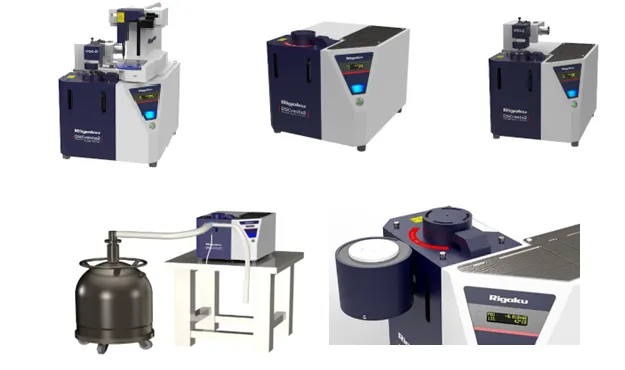
DSCvesta2 Differential Scanning Calorimeter

Use the arrow keys to navigate between tabs

DSCvesta2 is Rigaku’s next-generation differential scanning calorimeter designed for high-accuracy thermal analysis. It measures heat-flow changes during programmed heating and cooling, supporting the evaluation of melting, crystallization, glass transition, solid-state transition, reaction heat, and specific heat capacity. With its low-noise design, newly developed χsensor, self-diagnostic function, sample observation capability, and automatic sample changer compatibility, DSCvesta2 is suitable for advanced R&D, material evaluation, and quality-control applications.


Key Features:

  •  Wide measurement temperature range from -180°C to 725°C.
  •  Newly developed χsensor and low-noise design for detecting small thermal changes.
  •  Vestaeye self-diagnostic function checks the instrument status during startup, standby, and measurement.
  •  Real-time sample observation enables users to monitor color and shape changes during DSC analysis.
  •  The Automatic Sample Changer (ASC) accommodates up to 52 samples and 3 reference samples, and supports up to 1,000 consecutive measurements.
  •  Four cooling options are available: refrigerated cooling, LN₂ auto-filling cooling, LN₂ direct cooling, and circulator cooling.
  •  With the refrigerated cooling unit, continuous heating and cooling measurements from -95°C to 725°C can be performed without frequent liquid nitrogen refilling.
  •  Measurement method: Heat flux type DSC
  •  Measurement temperature range: -180°C to 725°C
  •  DSC measurement range: ±1000 mW
  •  Maximum heating rate: 150°C/min.
  •  Noise level RMS: ≤ 0.05 μW
  •  Energy precision: ±0.04%
  •  Temperature precision: ±0.03°C
  •  Specific heat accuracy: ±1%
  •  Baseline repeatability: ±5 μW
  •  Measurement atmosphere: Air, inert gas
  •  Maximum sample amount: 90 μL
  •  Cooling options: Refrigerated cooling, LN₂ auto-filling cooling, LN₂ direct cooling, and circulator cooling
  •  Power requirement: Single phase AC100–240 V, 50/60 Hz, 5 A, grounded outlet
  •  Glass transition, melting, and crystallization analysis of polymers.
  •  Purity, stability, and reaction heat analysis of pharmaceutical and chemical materials.
  •  Thermal characterization of electronic, semiconductor, and packaging materials.
  •  R&D and quality control of battery materials, composites, resins, rubbers, and coatings.
  •  Specific heat capacity, reaction kinetics, and material lifetime prediction.
  •  High-throughput and unattended thermal analysis workflows.

DSCvesta Differential Scanning Calorimeter

Use the arrow keys to navigate between tabs

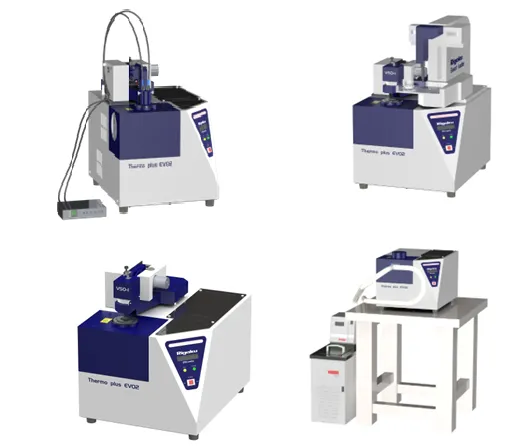
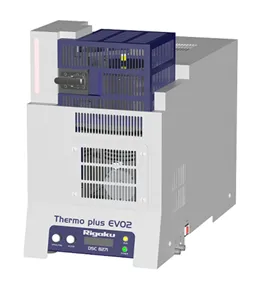
DSC8231 and DSC8271 are Rigaku differential scanning calorimeters designed for different thermal analysis requirements. DSC8231 is a compact and easy-to-use entry-level DSC for routine thermal analysis, while DSC8271 is a high-temperature DSC capable of measurements from room temperature to 1,500°C. These models support applications ranging from general quality control to high-temperature material research.

Key Features:

  •  DSC8231 is compact, easy to set up, and suitable for routine thermal analysis.
  •  DSC8231 supports low-temperature measurements with LN₂ auto-filling, LN₂ siphon, and bath circulator cooling options.
  •  DSC8271 supports high-temperature DSC analysis up to 1,500°C.
  •  DSC8271 is suitable for ceramics, metals, glass, and inorganic materials.
  •  Optional sample pans and sealing tools support different sample types, including liquid, volatile, and high-pressure sealed samples.
  •  Suitable for laboratories requiring both routine thermal analysis and high-temperature material evaluation.
  •  Measurement method: Heat flux type DSC
  •  Measurement temperature range: -170°C to 725°C
  •  DSC measurement range: ±400 mW
  •  Maximum heating rate: 150°C/min.
  •  Noise level RMS: ≤ 0.1 μW
  •  Measurement atmosphere: Air, inert gas
  •  Maximum sample amount: 90 μL
  •  Cooling options: Refrigerated cooling, LN₂ auto-filling cooling, LN₂ siphon cooling, and bath circulator cooling
  •  Power requirement: Single phase AC100–240 V, 50/60 Hz, 5 A, grounded outlet
  •  Polymer, resin, rubber, coating, and composite material analysis.
  •  Melting, crystallization, glass transition, and thermal stability evaluation.
  •  Pharmaceutical and chemical material characterization.
  •  Process condition evaluation and quality control.
  •  R&D and failure analysis for material development.
  •  Thermal analysis of electronic and packaging materials.

DSC8231 / DSC8271 Differential Scanning Calorimeters

Use the arrow keys to navigate between tabs

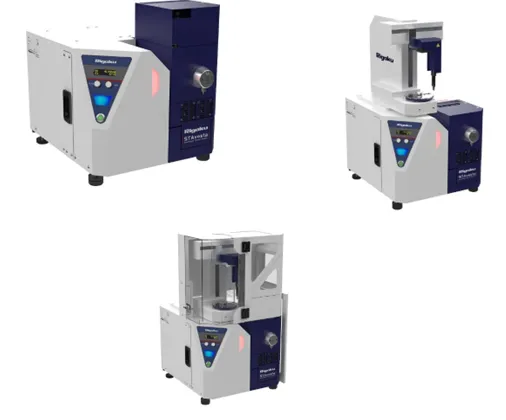
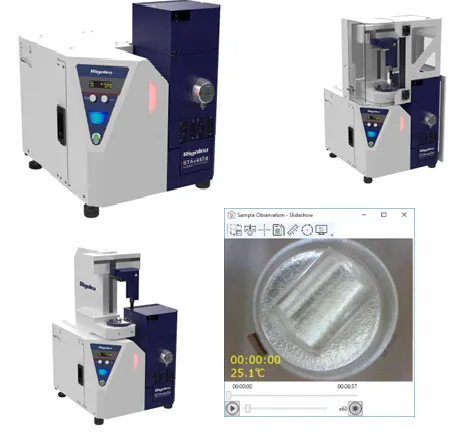
STAvesta is Rigaku’s next-generation simultaneous thermal analyzer designed for TG-DSC measurements. It simultaneously measures mass change and heat-flow behavior under programmed heating, cooling, or isothermal conditions. The system supports the analysis of thermal decomposition, oxidation, dehydration, adsorption and desorption, phase transitions, reaction heat, and thermal stability. It is suitable for R&D and quality control of polymers, chemicals, pharmaceuticals, inorganic materials, electronic materials, and composites.Supports six interchangeable furnace types: Standard (S), Sample Observation (C), High Temperature (H), Indirect Heated (B), Refrigerated Cooling (LR), and High-Humidity / Water Vapor Atmosphere (HUM), enabling flexible use for routine measurements, high-temperature material analysis, low-oxygen atmosphere measurements, low-temperature adsorption studies, and humidity-controlled analysis.

Key Features:

  • Simultaneously acquires TG and DSC signals for mass-change and heat-flow analysis.
  • Supports six interchangeable furnace types, including standard, high-temperature, indirect-heated, sample observation, refrigerated cooling, and high-humidity configurations.
  •  Vestaeye self-diagnostic function checks instrument status before measurement to reduce the risk of abnormal operation and sample loss.
  •  Automatic Sample Changer (ASC) accommodates up to 52 samples, 3 reference samples, and 5 calibration samples, and supports up to 1,000 consecutive measurements.
  •  Airtight furnace and balance chamber design enables rapid reduction of residual oxygen concentration around the sample.
  • * latBlank automatic baseline adjustment reduces manual blank measurements and baseline correction time.
  •  Horizontal differential triple-coil balance system provides excellent TG baseline reproducibility and detection of small mass changes.
  •  Built-in cooling fan enables rapid post-measurement cooling for high-throughput operation.
  •  Flexible gas control is available by connecting the 2ch-FLOW COMPO Jr. for temperature-programmed gas switching and flow control.
  •  Optional evolved gas analysis interfaces, including FTIR, GC-MS, and SPME, support combined thermal and gas-composition analysis.
     

DSC8231: 

  •  Measurement temperature range -150°C to 725°C, up to 750°C at maximum; DSC range ±100 mW; 
  •  maximum heating rate 100°C/min.; 
  • noise level RMS ≤ 0.5 μW.
  •  Maximum sample amount: 90 μL for DSC8231
  •  Power requirement: DSC8231 single phase AC100–240 V, 50/60 Hz, 5 A;

DSC8271: 

  • Measurement temperature range from room temperature to 1,500°C; DSC range ±100 mW; 
  •  maximum heating rate 20°C/min.; noise level RMS ≤ 5 μW.
  •  Measurement method: Heat flux type DSC
  •  Measurement atmosphere: Air, inert gas
  •  Maximum sample amount: 45 μL for DSC8271
  •  Power requirement: DSC8271 single phase AC100 V, 50/60 Hz, 15 A
  •  Melting, crystallization, reaction heat, and thermal stability evaluation.
  •  Material development, process optimization, and failure analysis.
  •  Research and quality-control applications for chemical, polymer, and advanced materials.
  • Thermal behavior analysis of electronic and packaging materials.

STAvesta Simultaneous Thermal Analyzer

Use the arrow keys to navigate between tabs

ELTRA’s CHS-580A is the ideal elemental analyzer for the simultaneous determination of carbon, hydrogen, and sulfur in organic samples. It features a resistance furnace with a vertical ceramic tube and utilizes ceramic crucibles as sample carriers.

Key Features:

  • Fast & simultaneous elemental analysis of Carbon (C), Hydrogen (H), Sulfur (S), Total Organic Carbon (TOC), and Total Inorganic Carbon (TIC).
  • Configurable for single element (C or S) or multi-element (C/S or C/H/S) analysis.
  • Wide concentration range from 0.005% to 100%.
  • High sample weights possible for the elemental analysis of heterogeneous samples.
  • Optional autoloader with 36 or 130 positions (an acid-resistant version is also available).
  • Optional TIC module for Total Inorganic Carbon analysis.
  • Measurement method: Simultaneous thermal analysis, TG-DSC
  •  Balance system: Horizontal differential triple-coil balance system
  •  Maximum sample amount: 1 g, 90 μL
  •  TG range: ±500 mg
  •  DSC range: ±600 mW at 100°C, ±1,400 mW at 1,000°C, ±3,000 mW at 1,500°C
  •  TG sensitivity / noise level RMS: 0.18 μg / 0.09 μg
  •  DSC sensitivity / noise level RMS: 10 μW / 5 μW
  •  Temperature accuracy: ±0.2°C
  •  Energy precision: ±1%
  •  Temperature precision: ±0.05°C
  •  TG baseline drift: <10 μg up to 1,000°C; <20 μg up to 1,400°C
  •  Measurement atmosphere: Air, inert gas, vacuum
  •  Self-diagnostic function: Yes
  •  Blank auto-adjustment function: Yes
  •  Power requirement: Single phase AC100–240 V, 50/60 Hz, 15 A, grounded outlet
  • Thermal decomposition, volatilization, glass transition, and thermal stability analysis of polymers.
  • Dehydration, oxidation, decomposition, and reaction heat analysis of pharmaceuticals, chemicals, and organic materials.
  •  Thermal stability and mass-loss behavior evaluation of battery, electronic, and packaging materials.
  •  High-temperature thermal behavior analysis of ceramics, metals, inorganic materials, and catalysts.
  •  Adsorption and desorption evaluation of adsorbent materials.
  •  Process optimization, quality control, failure analysis, and materials R&D.

STAvesta/C Sample Observation Simultaneous Thermal Analyzer

Use the arrow keys to navigate between tabs

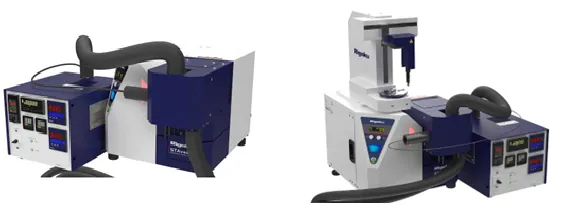
STAvesta/C is a simultaneous thermal analyzer equipped with real-time sample observation capability. It records sample appearance, color, shape, and volume changes during TG-DSC measurements. Compared with conventional thermal analysis that only provides mass-change and heat-flow data, STAvesta/C enables users to correlate visual information with thermal analysis curves, providing deeper insight into dehydration, melting, crystallization, expansion, carbonization, combustion, and morphology changes during heating.

Key Features:

  •  Enables real-time observation of sample shape and color changes during measurement.
  •  Correlates sample images with TG-DSC analysis results.
  •  Supports sample observation measurements up to 1,000°C.
  •  Compatible with the Automatic Sample Changer for continuous measurements.
  •  Devitrification prevention unit helps reduce contamination of the quartz protection tube and maintain clear observation images.
  •  Suitable for materials R&D and failure analysis requiring both thermal data and visual evidence.
  •  Measurement method: TG-DSC simultaneous thermal analysis with real-time sample observation
  •  Measurement temperature range: Room temperature to 1,100°C
  •  Sample observation measurement: Up to 1,000°C
  •  Balance system: Horizontal differential triple-coil balance system
  •  Maximum sample amount: 1 g, 90 μL
  •  TG range: ±500 mg
  •  DSC range: ±600 mW at 100°C; ±1,400 mW at 1,000°C
  •  Measurement atmosphere: Air, inert gas, vacuum
  •  Self-diagnostic function: Yes
  •  Blank auto-adjustment function: Yes
  •  Automatic Sample Changer: Optional
  •  Real-time morphology observation during material heating
  •  Dehydration, melting, crystallization, and carbonization analysis of hydrates, saccharides, pharmaceuticals, and organic materials
  •  Thermal deformation and decomposition observation of polymers, resins, rubbers, and composites
  •  Thermal failure analysis of electronic and packaging materials
  •  Materials R&D, quality control, and root-cause investigation
  •  Applications requiring simultaneous thermal data and sample images

STAvesta/HUM-1 / STAvesta/LR Environment-Controlled Simultaneous Thermal Analyzer

Use the arrow keys to navigate between tabs

STAvesta/HUM-1 and STAvesta/LR are simultaneous thermal analysis systems designed for specialized environmental control. STAvesta/HUM-1 enables TG-DSC measurements under a water vapor atmosphere, making it suitable for studying water uptake, dehydration, and mass changes under controlled humidity conditions. STAvesta/LR enables low-temperature TG-DSC measurements down to -40°C, supporting gas adsorption materials, adsorption and desorption behavior, and low-temperature thermal analysis applications.

Key Features:

  •  STAvesta/HUM-1 enables TG-DSC analysis under water vapor atmosphere.
  •  Humidity control from dry conditions to 90% RH supports studies of moisture-sensitive materials.
  •  High-precision humidity and temperature sensing improves long-term stability of humidity control.
  •  STAvesta/LR supports measurements from -40°C to 700°C for low-temperature adsorption and high-temperature pretreatment.
  • Programmable heating and cooling sequences allow pretreatment and adsorption/desorption evaluation in one continuous run.
  •  Compatible with the Automatic Sample Changer for improved multi-sample throughput.
  •  Suitable for adsorbents, hydrates, foods, pharmaceuticals, powders, catalysts, and environmentally sensitive materials.

  •  STAvesta/HUM-1 measurement environment: Water vapor / humidity-controlled atmosphere
  •  HUM-1 humidity generation method: Bubbling bath and dry gas combination method
  •  HUM-1 humidity range: Room temperature to 80°C, dry to 90% RH
  •  HUM-1 gas: Dry N₂
  •  HUM-1 humidity sensor: Polymer-type relative humidity sensor
  • HUM-1 temperature measurement element: Pt resistance temperature sensor
  •  HUM-1 continuous humidity duration: 100 hours at 60°C and 90% RH; 40 hours at 80°C and 90% RH
  •  STAvesta/LR measurement temperature range: -40°C to 700°C
  •  Measurement method: TG-DSC simultaneous thermal analysis
  •  Automatic Sample Changer: Optional
  •  Water uptake, dehydration, and mass-change analysis of moisture-sensitive materials.
  •  Thermal stability and reaction behavior under water vapor atmosphere.
  •  Humidity sensitivity evaluation of foods, pharmaceuticals, powders, and polymers.
  •  Gas adsorption and desorption analysis of adsorbent materials at low temperatures.
  •  Performance evaluation of CO₂ and other gas adsorption materials.
  •  Pretreatment and thermal analysis of catalysts, environmental materials, and porous materials.


Global Service

Location Detail

Social Media

Interactive Online

Contact Us

Leave Your Message

Affiliates

China | USA | Europe

Visiting Application

Visitor Portal

Vendor Management

Vendor Portal

About Us
Profile
Core Values
Contact Us
Product & Service
Representative
Own-Branding
Wafer Reclaim
ESG
Chairman's Words
Stakeholders
Reports
Careers
Development
Welfare
Job Search
Investors
Monthly Revenue
Annual Reports
Conference
Press Center
Latest News
Events
Newsletter

Copyright ©SCIENTECH. All trademarks and images are the property of their respective owners and protected by law.