
Skip to header

Main navigation

辛耘公司 SCIENTECH SCIENTECH
      • Profile
      • Core Value
      • Organization
      • ESG
      • Inclusive Workplace
      • Certificates
      • Public Relations
      • Global Presence
      • Product List
      • Camera Lens
      • Wet Bench
      • Single Wafer
      • Advanced Baking
      • Release Layer Coating
      • Batch Panel-level Wet Process
      • Single Panel-level Wet Process
      • Glass Release Layer Coating
      • Temporary Bonding
      • Debonding & Cleaning
      • Debonding
      • 12" Wafer Reclaim
      • Message from the Chairman
      • ESG Committee
      • Stakeholders
      • Materiality Issues
      • Integrity and Pragmatism
      • Supportive Workplace
      • ECO friendly
      • Social Contribution
      • GHG Emissions
      • Photo Gallery
      • ESG Report
      • Welfare
      • Job Search
      • Learning and Development
      • Fundamentals
      • Annual Reports
      • Monthly Revenue
      • Board of Directors
      • Committees
      • Internal Audit
      • Risk Management
      • Major Internal Policies
      • Status Report
      • Shareholders' Meeting
      • Investor Conference
      • Stock Quotes
      • TWSE MOPS
      • Contacts
      • Latest News
      • Event List
      • Newsletter
  • English
  • 繁體中文
SCIENTECH

Otsuka

Breadcrumb

  • Home
  • Otsuka

Since the establishment of its predecessor company in 1970, Otsuka Electronics has operated under the Otsuka Group's corporate philosophy: "Otsuka-people creating new products for better health worldwide." As a company that provides solutions utilizing the power of optics and cutting-edge technologies, Otsuka Electronics is dedicated to the development, manufacturing, and marketing of optical, medical, and industrial measurement devices and equipment.
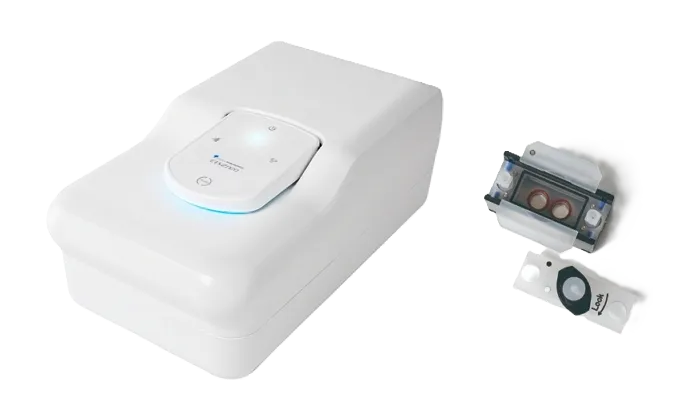
Zeta-potential & Particle Size Analyzer ELSZneo

Use the arrow keys to navigate between tabs

Here's the English translation for the ELSZneo instrument:

ELSZneo: High-End Particle, Zeta Potential, and Molecular Weight Analyzer
The ELSZneo is the high-end model of the ELSZ series. This instrument accurately measures the zeta potential and particle size of both diluted and concentrated solutions, as well as the molecular weight of polymers.

As new features, the ELSZneo offers multi-angle measurement to improve the separability of particle size distribution, particle concentration measurement, microrheology measurement, and gel network analysis.

Key Features:

  • Particle size and zeta potential measurement across a wide concentration range, from diluted to concentrated solutions.
  • Multi-angle measurement to achieve particle size distribution with higher separability.
  • Zeta potential measurement of solid surfaces even in high salt concentrations.
  • Particle concentration analysis using Static Light Scattering (SLS).
  • Microrheology measurement using Dynamic Light Scattering (DLS).
  • Gel network and gel heterogeneity analysis by measuring the intensity of scattered light and the diffusion coefficient of the sample at multiple points.
  • Standard flow cell that can be used for two types of measurements (particle size and zeta potential) without replacing samples.
  • Wide measurement temperature range from 0 ∘C to 90 ∘C.
  • Temperature gradient function which enables denaturation (melting temperature) analysis for proteins.
  • Electrophoretic mobility measurement and plot analysis for accurate zeta potential determination.
The ELSZneo is ideally suited for both basic and applied research in particle characterization across a wide array of fields. These include surface chemistry, inorganic materials, semiconductors, polymers, the food industry, biotechnology, pharmaceuticals, medicine, and surface research of film and flat-state samples.

Here are some key application areas:

New Functional Materials

  • Fuel Cells: Research involving carbon nanotubes, fullerenes, functional films, catalysts, and nano-metals.
  • Bionanotechnology: Studies on nanocapsules, dendrimers, Drug Delivery Systems (DDS), and nanobubbles.
  • Biocompatible Materials

Ceramics and Paints

  • Ceramics: Analysis of materials like silica, alumina, and TiO₂.
  • Surface Modification: Dispersion control of inorganic sols.
  • Dispersibility, Durability, and Shelf Life Control: For inks, carbon black, and organic pigments.
  • Slurry State Samples
  • Color Filters
  • Flocculation Research

Semiconductors

  • Alien Objects Research: Investigation of contaminants on silicon wafers.
  • Interaction Research: Abrasive/additive interactions on wafer surfaces.
  • CMP (Chemical Mechanical Polishing) Slurry

Polymers and Chemicals

  • Emulsion Dispersion Stability: To extend product shelf life.
  • Surface Modification: Of latex.
  • Function Research: Of polyelectrolytes.
  • Process Control: For paper production and pulp additive research.

Pharmaceutical and Food

  • Emulsion Dispersion Stability: To extend product shelf life.
  • Dispersibility Control: Of liposomes and vesicles.
  • Functionality: Of surfactants (micelles).
  • Exosomes
  • Viruses, Virus-like Particles (VLP)
  • Proteins
  • ISO 22412:2017

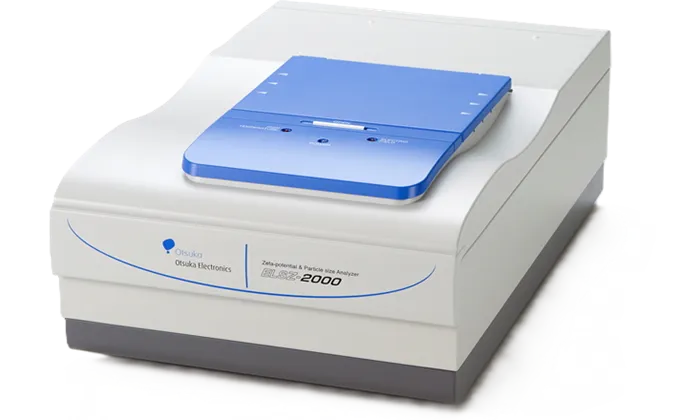
Zeta-potential & Particle Size Analyzer ELSZ-2000 series

Use the arrow keys to navigate between tabs

The ELSZneo builds on its established capabilities for zeta potential and particle size measurement by adding a new molecular weight analysis function. It offers an impressive particle size range from 0.6 nm to 10 µm and accommodates a wide concentration range from 0.00001% to 40%.

Its innovative electro-osmosis measurement allows for highly precise zeta potential analysis using a mere 130 µL disposable cell. Furthermore, a new auto temperature gradient function, with an extended range between 0°C and 90°C, enables accurate melting point and phase transition point analysis.

Key Features:

  • Higher Sensitivity & Faster Measurement: Achieved with a new Avalanche Photodiode (APD).
  • Thermal Analysis Capabilities: Melting point and phase transition point analysis are now possible through the auto temperature gradient function.
  • Wide Temperature Range: Operates across a broad spectrum from 0°C to 90°C.
  • High-Precision Zeta Potential: Enhanced by electro-osmosis measurement and plot analysis.
  • Salt-Tolerant Measurement: Supports zeta potential analysis even in salt-condensed samples.
  • Surface Zeta Potential: Capable of measuring the surface zeta potential of smaller area samples.
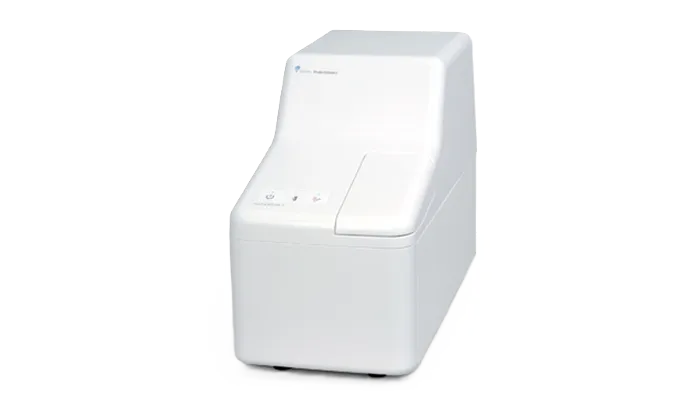
The ELSZneo is perfectly suited for both basic and applied research in particle characterization across a broad spectrum of fields. These include:

  • Surface Chemistry
  • Inorganic Materials
  • Semiconductors
  • Polymers
  • Food Industry
  • Biotechnology
  • Pharmaceuticals
  • Medical Applications
  • Surface Research of Films and Flat State Samples

Here's a breakdown of its key application areas:

New Functional Materials

  • Fuel Cells: Research involving carbon nanotubes, fullerenes, functional films, catalysts, and nano-metals.
  • Bionanotechnology: Studies on nanocapsules, dendrimers, Drug Delivery Systems (DDS), and nanobubbles.

Ceramics and Paints

  • Ceramics: Analysis of materials such as silica, alumina, and TiO2.
  • Surface Modification: Research into the dispersion and cohesion of inorganic sols.
  • Pigment Stability: Understanding the dispersion and cohesion of carbon black and organic pigments.
  • Slurry State Samples
  • Color Filters
  • Flotation Adsorption Research

Semiconductors

  • Contaminant Analysis: Research on alien objects found on silicon wafers.
  • Surface Interactions: Investigating the interaction of abrasives/additives on a wafer surface.
  • CMP (Chemical Mechanical Polishing) Slurry analysis.

Polymers and Chemicals

  • Emulsion Stability: Studying emulsion dispersion and cohesion.
  • Latex Modification: Research into the surface modification of latex.
  • Polyelectrolyte Functionality: Investigating the function of polyelectrolytes.
  • Paper Production: Process control and pulp additive research.

Pharmaceutical and Food

  • Emulsion Stability: Analyzing emulsion dispersion and cohesion for product quality.
  • Liposome and Vesicle Control: Managing the dispersion and cohesion of liposomes and vesicles.
  • Surfactant Functionality: Understanding the functionality of surfactants (micelles).
  • ISO 22412:2017 
     

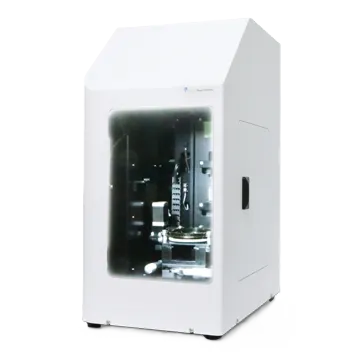
Multi-sample Nanometer Particle Size Measurement System nanoSAQLA

Use the arrow keys to navigate between tabs

Introducing a non-invasive, non-disruptive solution for rapid, high-throughput analysis. This advanced optical system enables one-touch, continuous measurement of up to five samples in just about one minute—without compromising on performance or accuracy.

Designed to meet the demands of modern laboratories, the system is lightweight, compact, and space-efficient, while supporting a broad concentration range from dilute to highly concentrated samples. Its non-immersion design eliminates the risk of cross-contamination and simplifies cleaning and maintenance.

When used without the autosampler, it allows seamless, non-stop measurement of up to five samples, making it ideal for labs that require speed, precision, and reliability.

Key Features

  • One-Touch Operation: Effortless setup for up to five samples, each under unique conditions.
  • Wide Measurement Range: Accurately measures both dilute and highly concentrated samples.
  • Fast Throughput: Delivers results in approximately one minute.
  • Temperature Gradient Capability: Built-in support for thermal variation testing.
  • Contamination-Free Analysis: Non-immersion design ensures clean, uninterrupted operation.
  • Suitable for fundamental and applied particle characterization research in fields such as inorganic materials, semiconductors, polymers, food, biotechnology, pharmaceuticals, and medicine.
  • ISO 22412:2017 

Polymer Phase Structure Analyzer PP-1000

Use the arrow keys to navigate between tabs

The PP-1000 utilizes small-angle light scattering with visible light to analyze polymer and film structures in real time and on-site. Unlike X-ray or neutron-based systems, it effectively captures larger structures (μm scale) due to its use of visible light.

It supports optical anisotropy evaluation and spherulite size analysis in crystalline films via Hv scattering with polarizers, and measures polymer blend correlation lengths through Vv scattering.

Key Features

  • Scattering angle range: 0.33–45° in as fast as 10 ms (100 ms with HDR)
  • Analyzes submicron to several hundred micron structures
  • Compatible with solution samples via specialized cells
  • Easy software switch between Hv and Vv scattering
  • Compact tabletop design, ideal for laboratory use
  • Dynamic Measurement Capabilities
  • Polymer blend phase separation
  • Polymer crystallization and growth rate
  • Crystal size calculation
  • Molecular orientation analysis
  • Aggregation and thermosetting processes
  • Structural changes due to temperature or stretching*
  • UV-induced curing process*

*Items marked require prior consultation. Contact us for details.

  • Packaging materials
  • Electronic components
  • Automotive materials
  • Semiconductor materials
  • Bottle-grade polymers
  • Diverse polymer materials (e.g., gels, crystalline films, polymer alloys)

Global Service

Location Detail

Social Media

Interactive Online

Contact Us

Leave Your Message

Affiliates

China | USA | Europe

Visiting Application

Visitor Portal

Vendor Management

Vendor Portal

About Us
Profile
Core Values
Contact Us
Product & Service
Representative
Own-Branding
Wafer Reclaim
ESG
Chairman's Words
Stakeholders
Reports
Careers
Development
Welfare
Job Search
Investors
Monthly Revenue
Annual Reports
Conference
Press Center
Latest News
Events
Newsletter

Copyright ©SCIENTECH. All trademarks and images are the property of their respective owners and protected by law.